


Touchable Florence: From Taste to Design Authority
Artisan Paint · Imported Artisan Paint Brands · Top 10 Artisan Paint Brands · Luxury Artisan Paint · High Value Artisan Paint
How did Florence, the birthplace of the Renaissance, forge its taste into an enduring aesthetic authority?
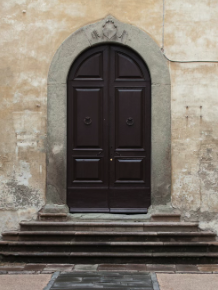
(Video content: The collision of ancient and contemporary, the sculptural quality of micro-perforations, the confident declaration of velvet, the oriental elegance of tussah silk, the delicate texture of calfskin. You can bring the timelessness of that door and the Tuscan sunset into your home simultaneously.)
Florence You Can Touch
There exists a taste that cannot be easily replicated. It does not follow trends—it defines them. Florence is precisely that.
Aesthetics may not have a textbook, but Florence wrote its prologue for the world. How did it establish aesthetic standards that have endured for five centuries? And how did it transform these standards into an unshakable authority in the hands of designers?
The following three chapters will reveal the principles behind this. This is not just an interpretation of a city—it is a knowledge system that will solidify your authority in design.
The Cradle of the Renaissance
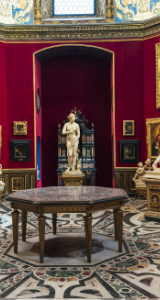
The charm of Florence is inseparable from its golden age—the Renaissance. This is not merely an abstract historical term, but a set of principles that established aesthetic authority for generations to come.
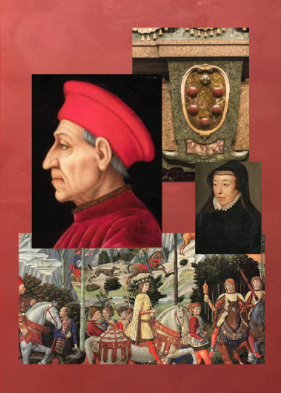
The Medici family played a role far beyond that of “godfathers.” They were the ultimate “tastemakers” of their era.
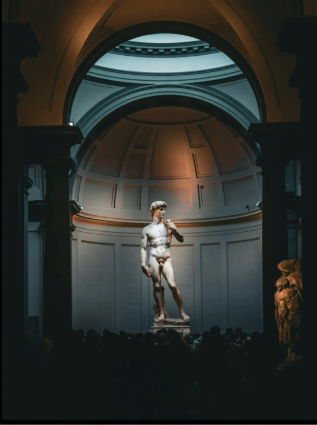
Their strategic patronage, backed by capital, was essentially a grand cultural curation that defined “what constitutes a masterpiece.” The composition of da Vinci and the power of Michelangelo, authenticated by this center of power, became the aesthetic paradigms of the age. Particularly, Michelangelo’s David was not merely a sculpture but the ultimate definition of “perfection.”
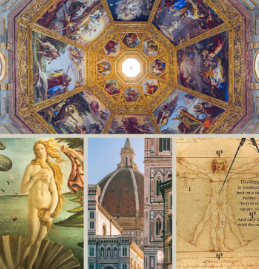
The aesthetic authority of the Renaissance manifested on two levels: first, the pursuit of perfect form rooted in art itself; second, the use of sensory opulence to showcase the power and wealth of patrons. These two seemingly contrasting styles together formed the foundation of Florentine taste.
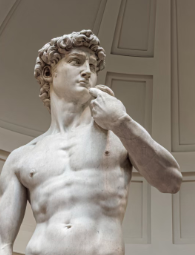
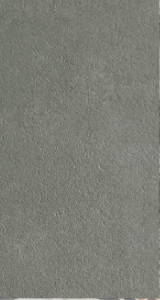
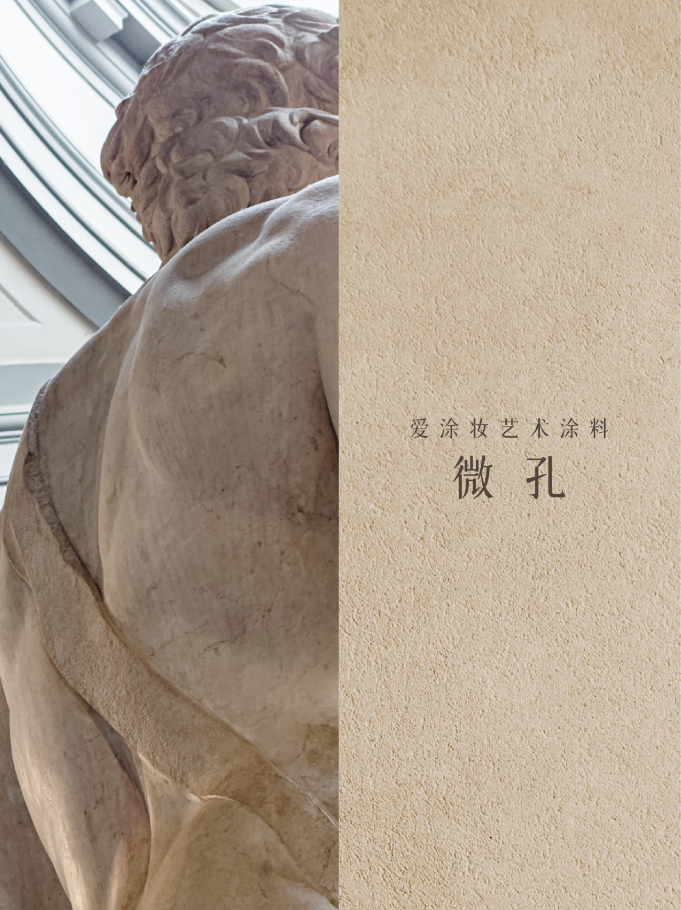
Micro Cement
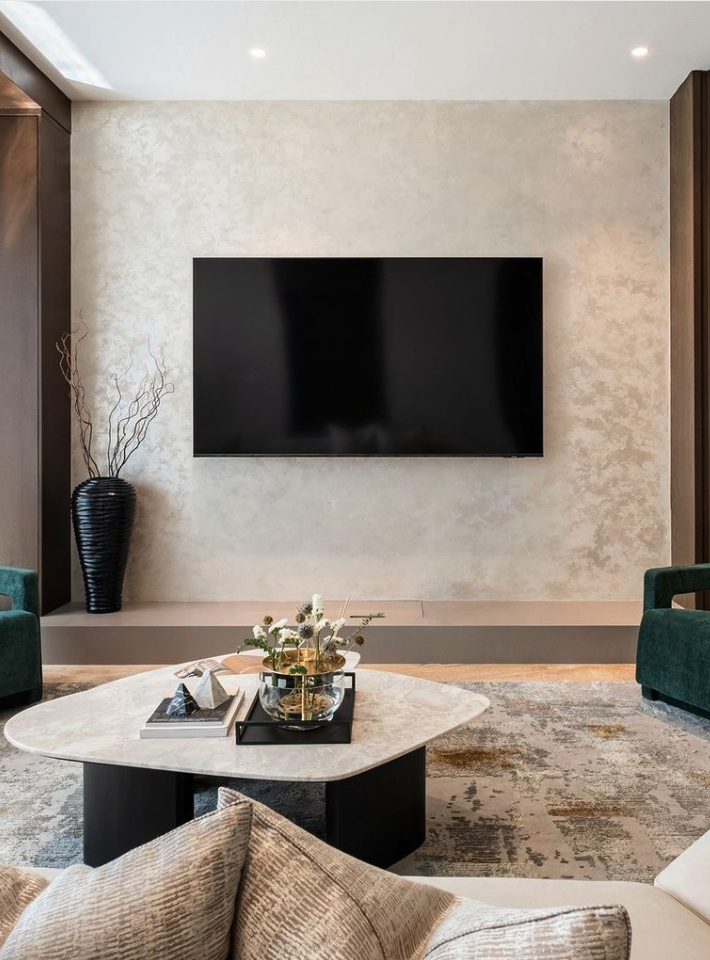
Inspired by the pure, sculptural power of David. The seamless, delicate texture of micro-perforations lends walls an artistic sense of volume—a modern tribute to the Renaissance pursuit of “perfect form.”
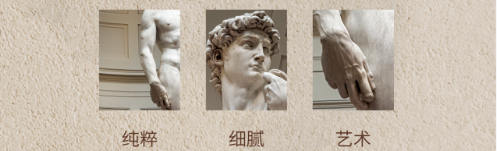

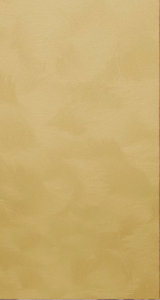
Gilded Eider
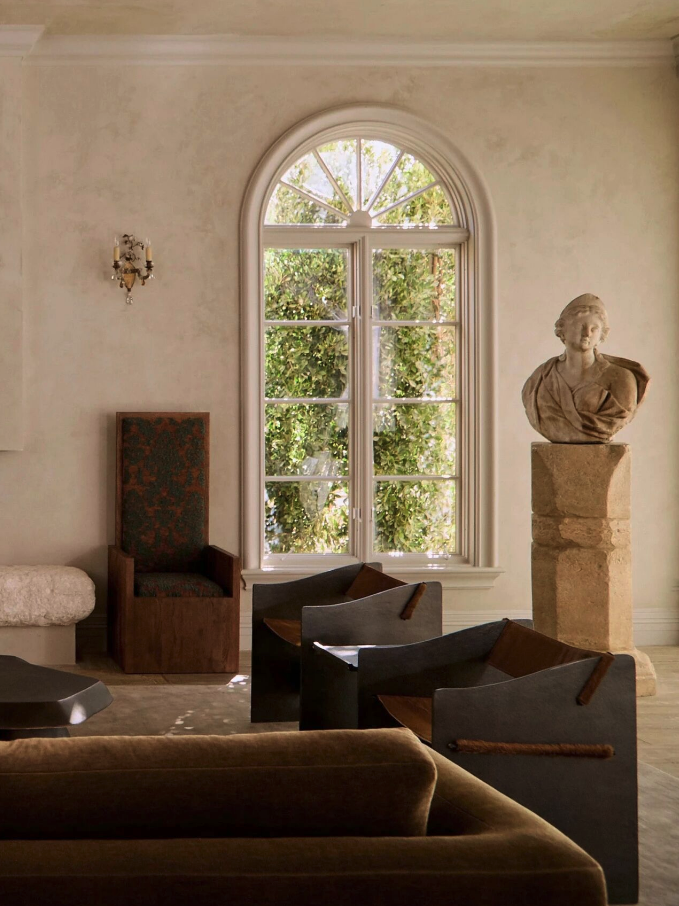
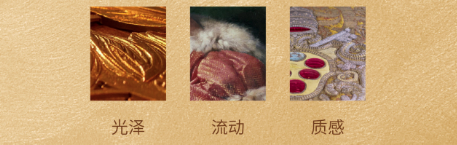
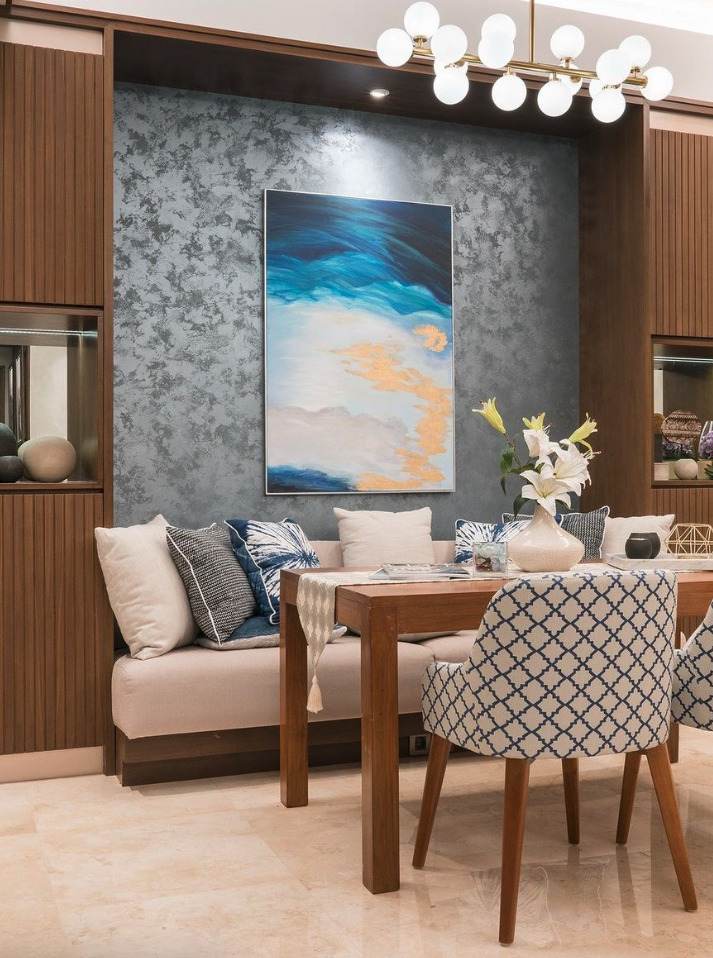
The Medici family understood profoundly that taste required visual symbols of power. The flowing metallic sheen and opulent texture of Gilded Eider are a contemporary translation of such symbolism. Using it within a space is, in itself, a confident declaration of design.


Fatto a Firenze
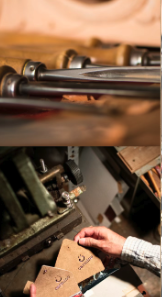
“Fatto a Firenze” (Made in Florence) is not merely a label of origin—it is an authoritative declaration of taste. From the craftsmanship monopolized by artisans during the medieval era of the Medici, to the modern fashion empires built by Gucci and Salvatore Ferragamo, this lineage has never been interrupted. It is, in essence, a system that defines “luxury” through supreme artistry.
Pitti Palace
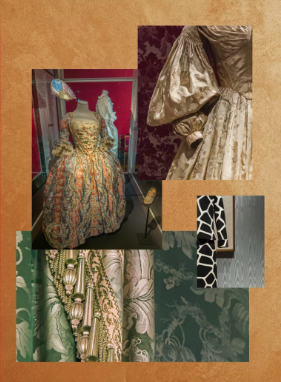
The Pitti Palace is less a museum of fashion and more a “supreme court” of materials. The silks, leathers, and Nubuck displayed here are not silent exhibits — they are the foundational code that constitutes the genetic makeup of Florentine style.
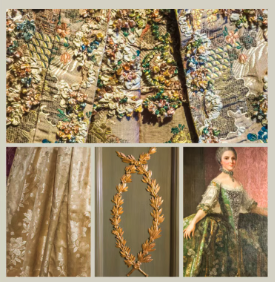
They collectively point to one core principle: Texture is a statement. The relentless pursuit of “tactile quality” is precisely the means by which “Fatto a Firenze” establishes its unquestionable authority. Mastering this language of texture is the cornerstone of building design authority.
Sky Silk
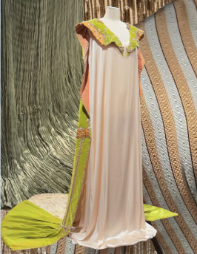
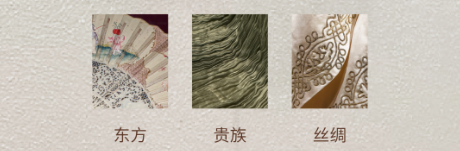
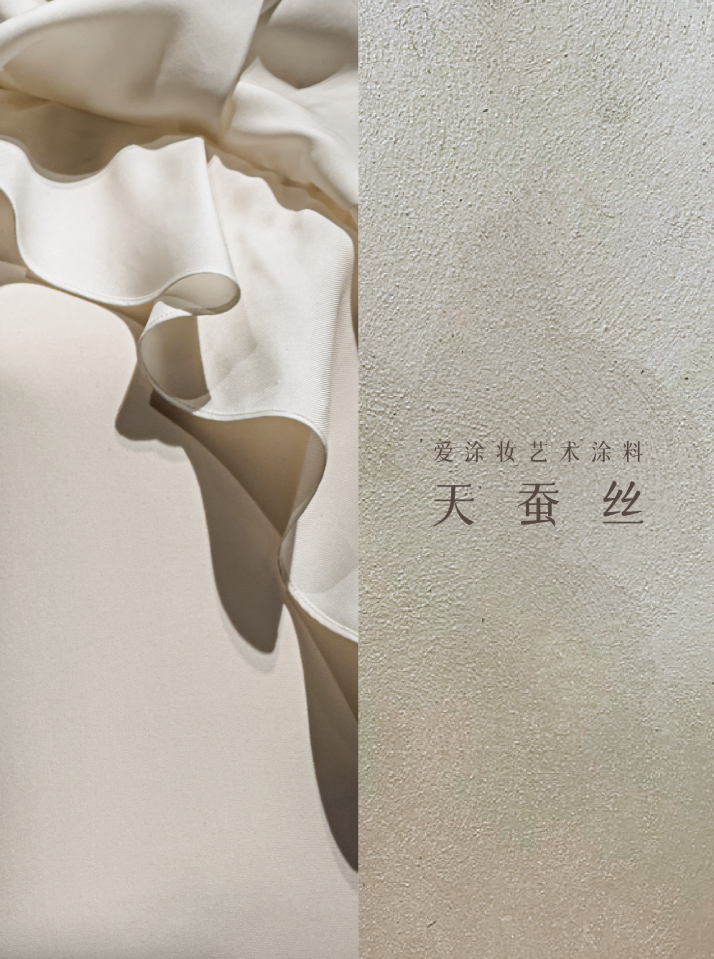
Chinoiserie was once a trend fervently pursued by European nobility, and silk served as the hard currency in East-West luxury trade. Sky Silk artistic coating infuses spaces with a tastefully translated Orientalist texture.
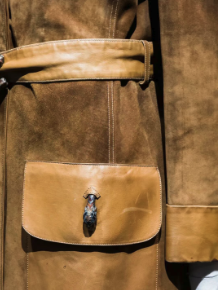
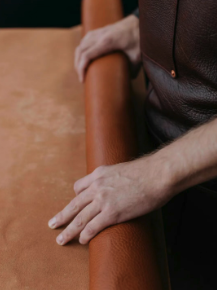
Calf Leather
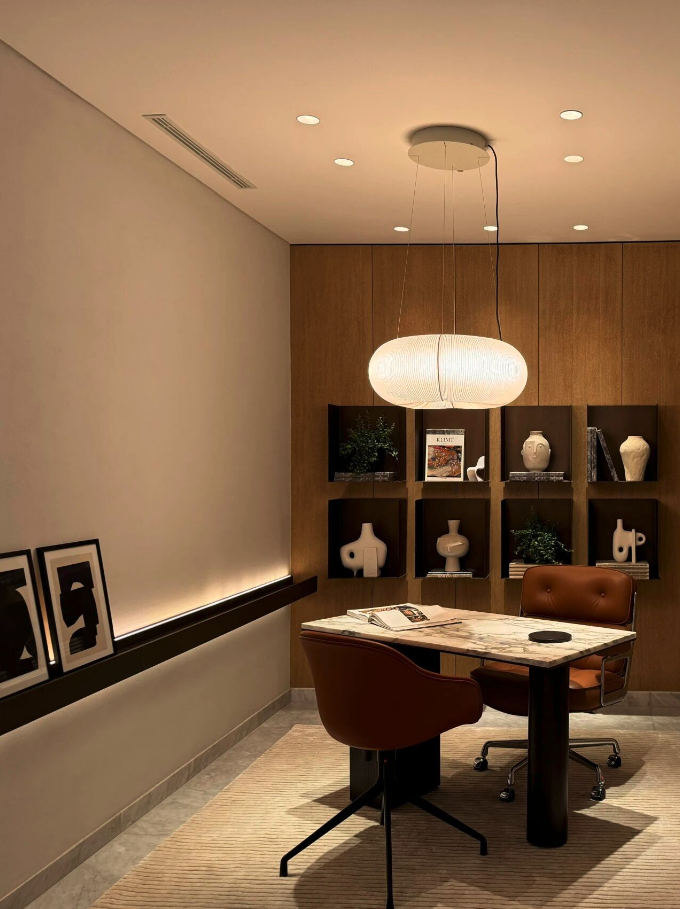
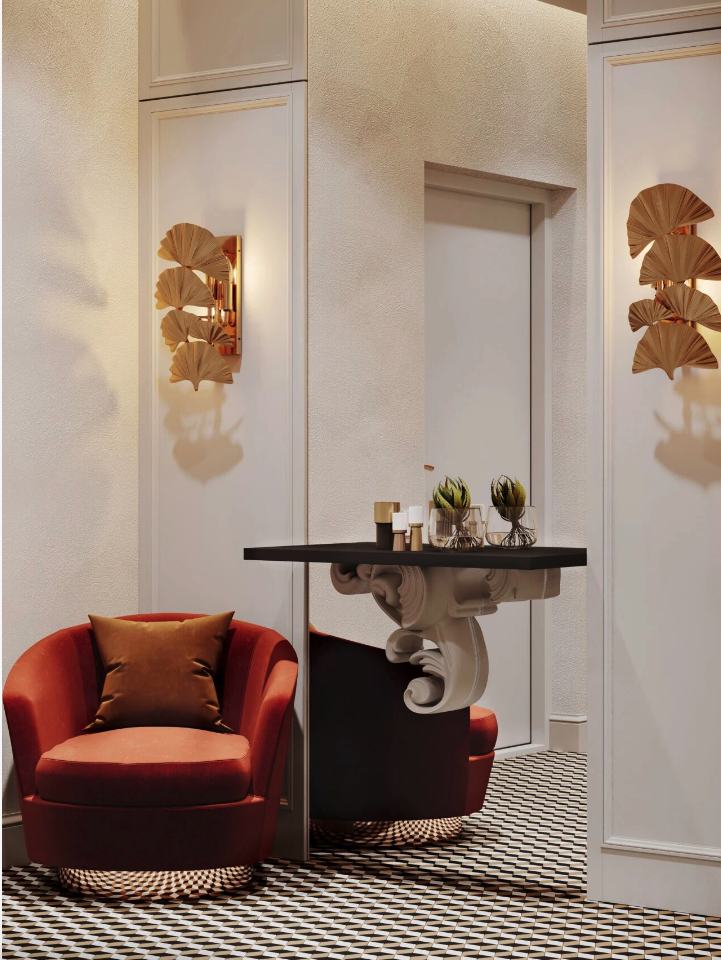
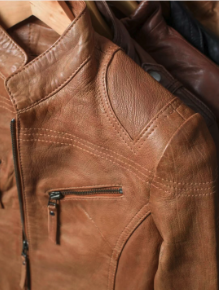
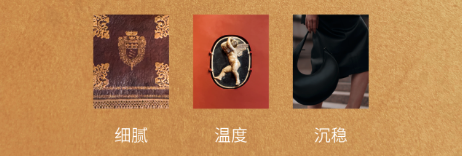
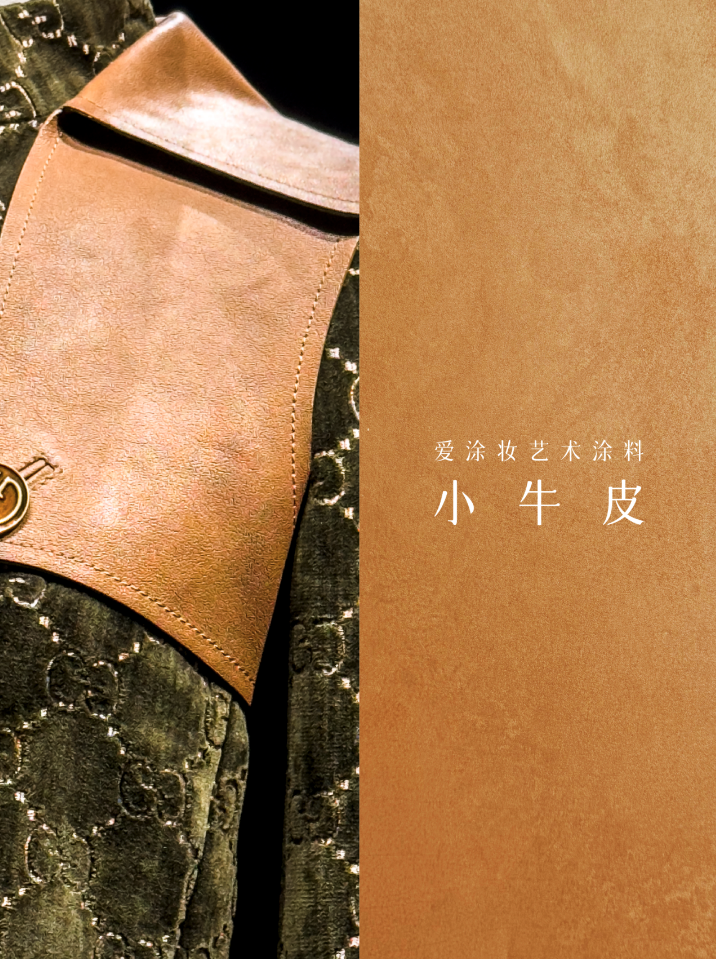
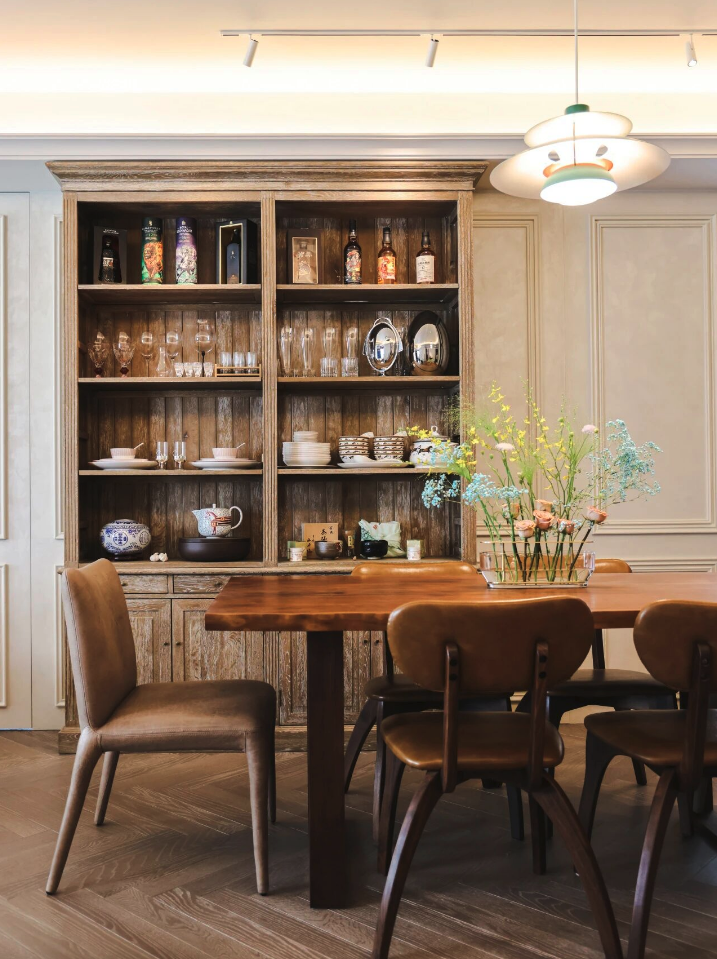
If there is one texture that defines the tactile essence of Florence, it is undoubtedly premium leather. Calf Leather textured artistic coating allows walls to possess the delicacy and warmth of a luxury handbag, creating a composed, refined, and unspoken luxurious backdrop for any space.

Nubuck
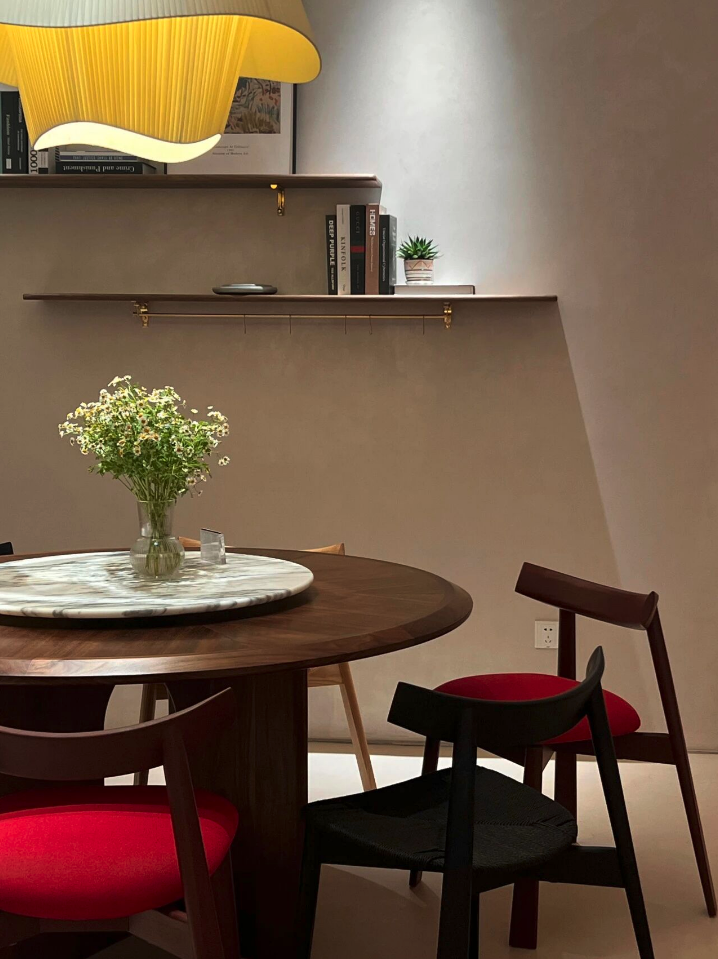
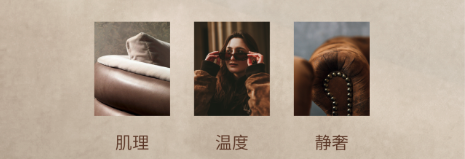
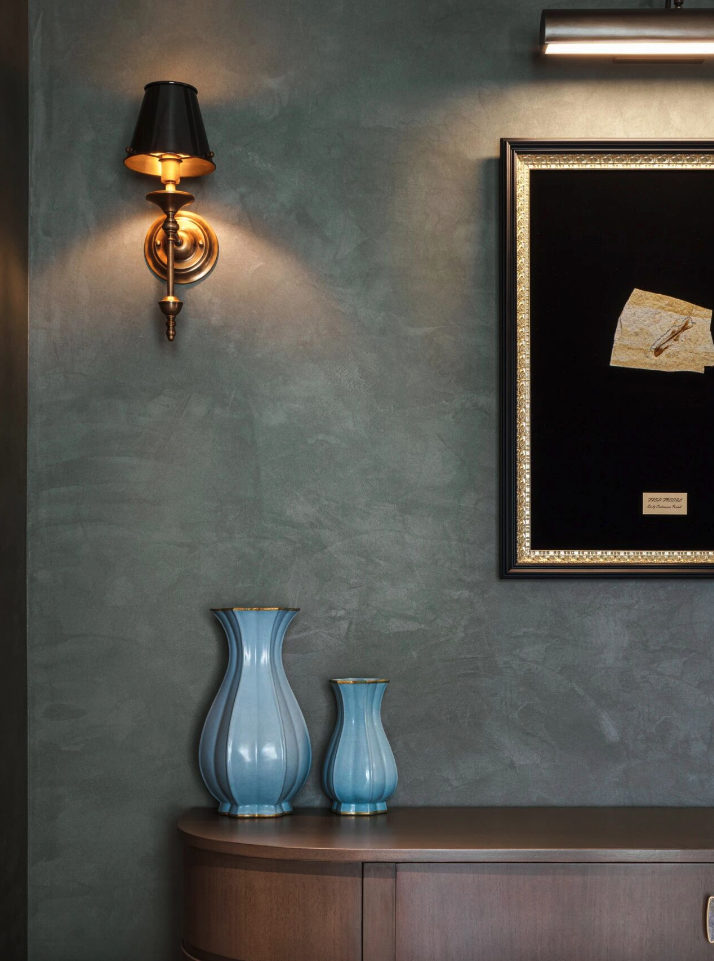
This is the most understated signature in Florentine style. It transforms the warmth and texture of leather into a more intimate, enveloping language for walls. It is not meant for ostentation, but to construct a context of “Quiet Luxury”.

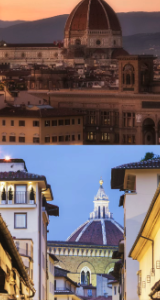


The Nuance of Present Living
“La Vita Fiorentina” is not a casual indolence, but rather a daily ritual centered on “beauty.” It is a form of “slowness” with an aesthetic pulse—a deliberate act of transforming the everyday into a statement of taste: one might take a detour to pass by a beloved sculpture, or spend two hours savoring the rich aroma of coffee under a specific play of light and shadow.
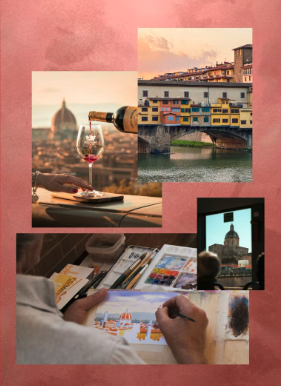
This philosophy of weaving refinement into the fabric of everyday life finds its ultimate expression in the Ponte Vecchio. While contemporary luxury retail spaces often strive for an air of polished detachment, Florence’s most prestigious luxury marketplace is housed within a medieval stone bridge. This is no coincidence, but rather a deeply intentional act of urban aesthetic curation.
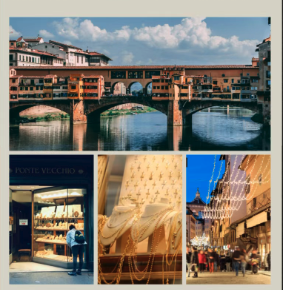
The mastermind behind this was Cosimo I de’ Medici. In the 16th century, he deemed the bridge’s original butcher shops and tanneries “unsightly” and decreed that only “more noble” goldsmiths could operate there. At its core, this decision leveraged power to endorse taste.
It profoundly reveals a principle: the environment itself is the ultimate symbol that defines luxury. The Medici transformed this bridge into a physical embodiment of power and refinement, providing the ultimate blueprint for future luxury retail.
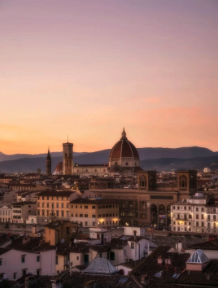
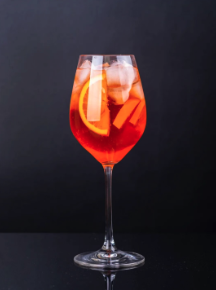
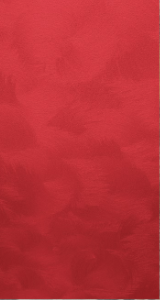
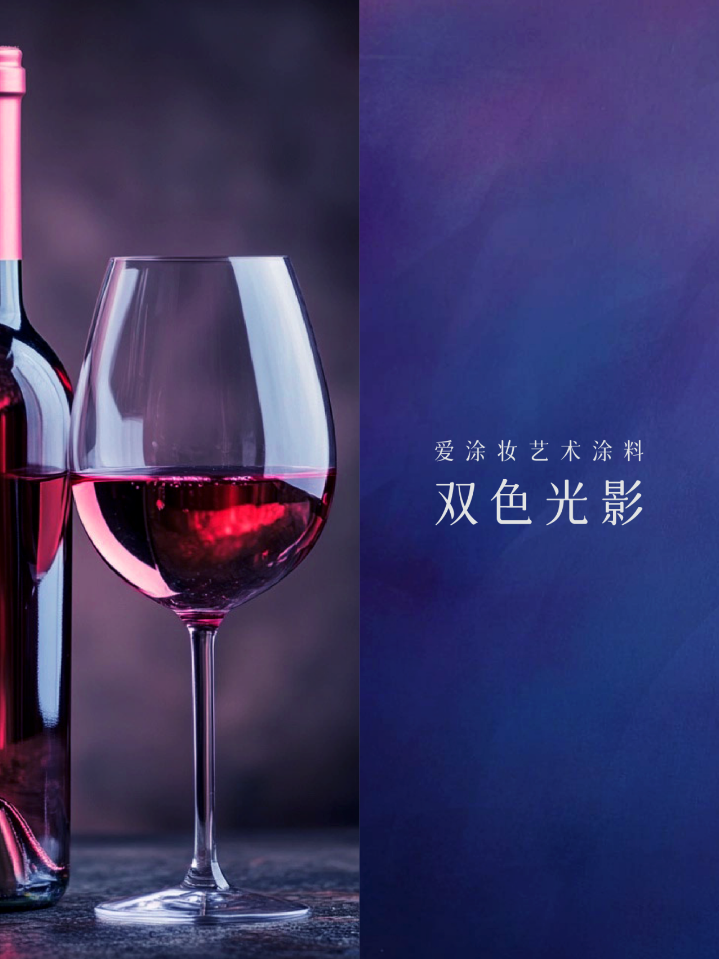
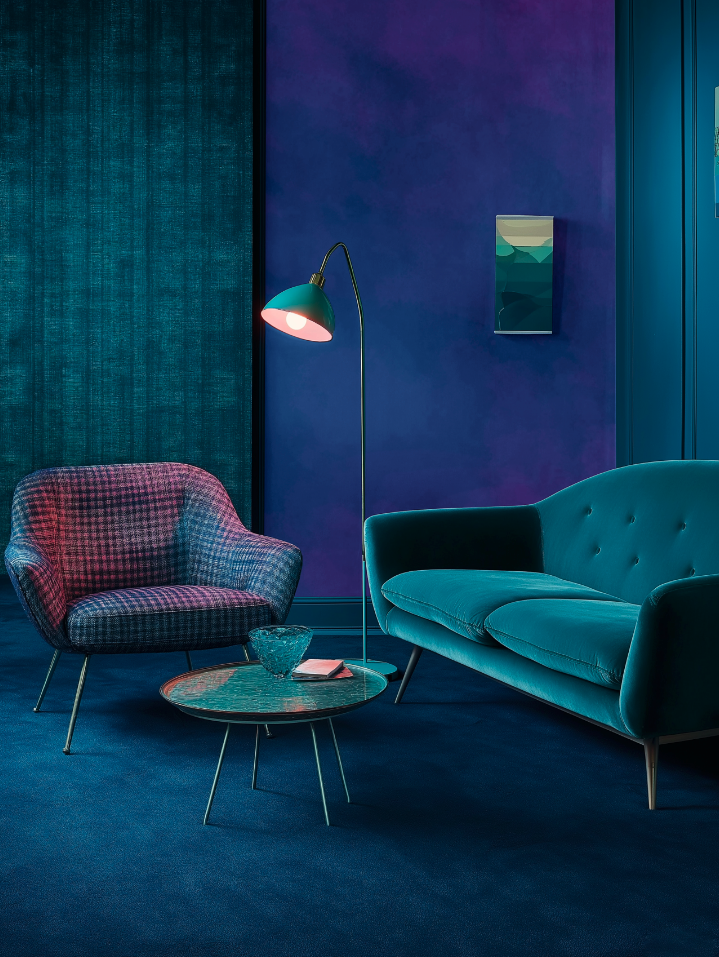
Rouge d’Artisan – Duo-Tone
It translates Florence’s “chromatic moods” – the richness of Chianti wine, the sweetness of gelato, the warmth of the sunset – into a tangible spatial atmosphere. The fusion of the two colours embodies the intrinsic philosophy of “La Vita Fiorentina”.
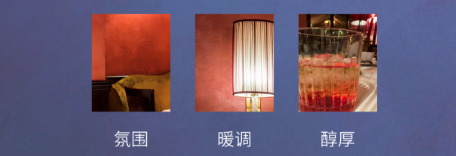
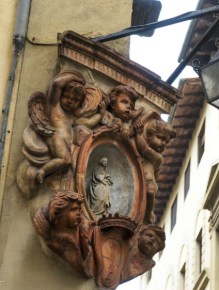
Rust Patina
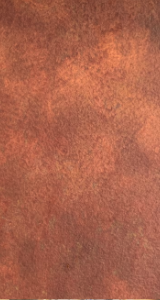
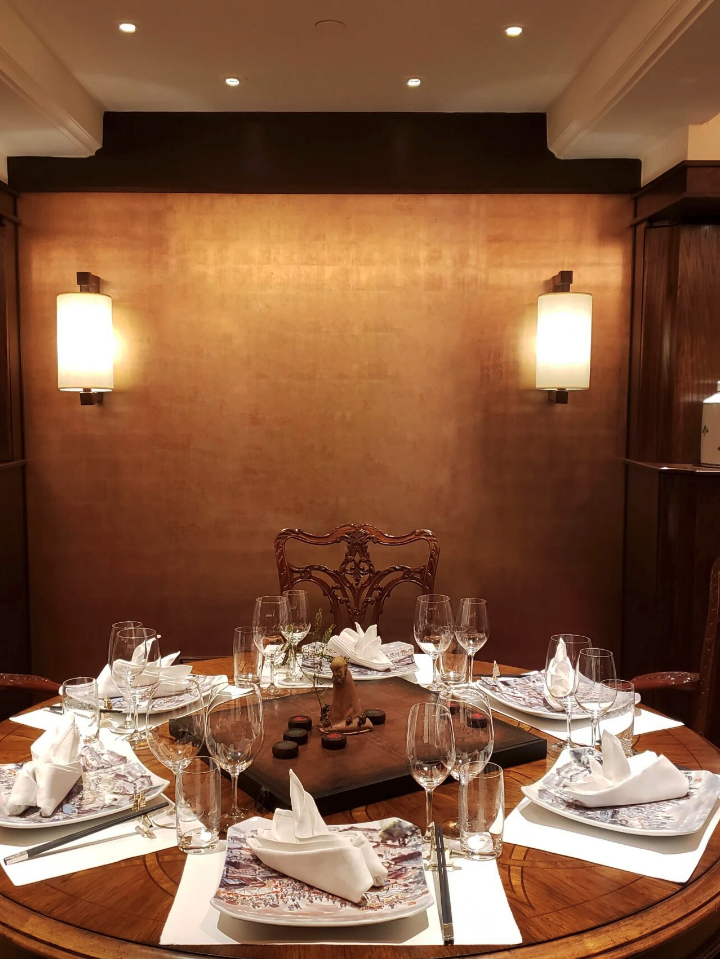
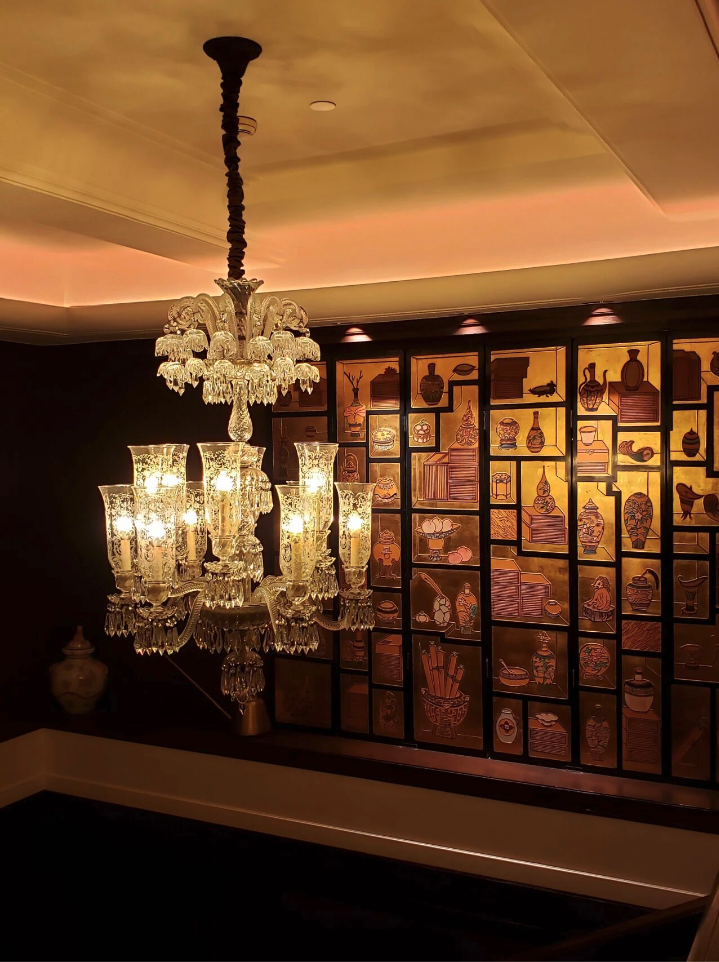
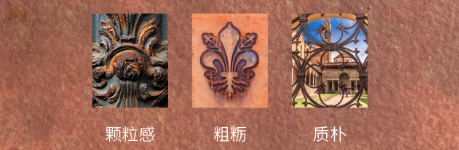
This is the cornerstone of Florentine taste. Its coarse, rustic granularity does not merely replicate “rusticity,” but provides a genuine and powerful backdrop for modern spaces. This material itself conveys: true luxury must be built upon a warm and substantial texture that can withstand the test of time.

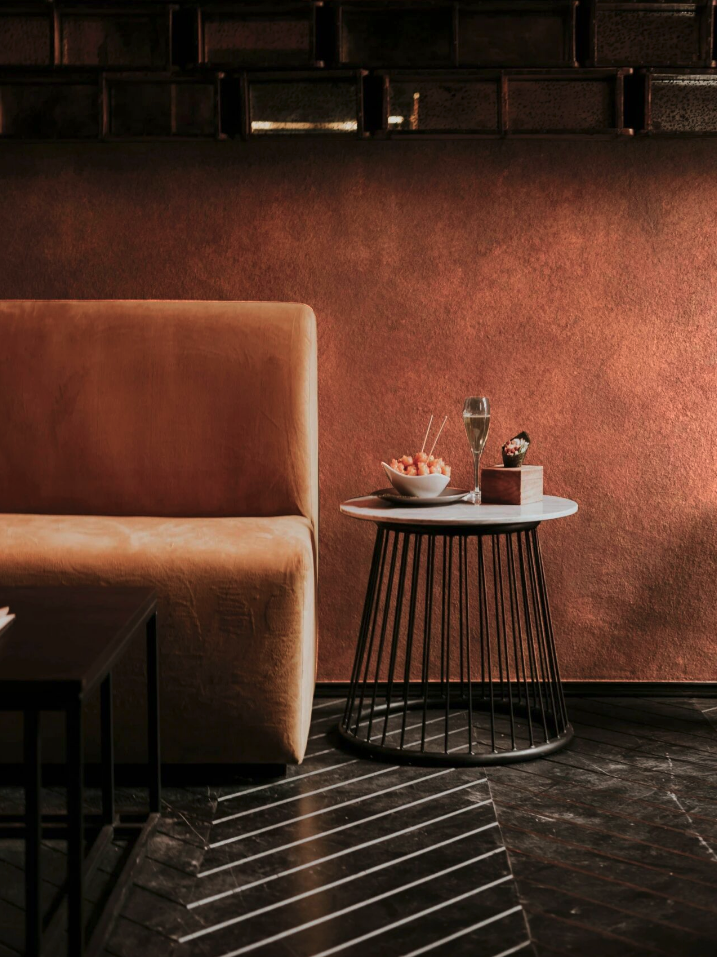
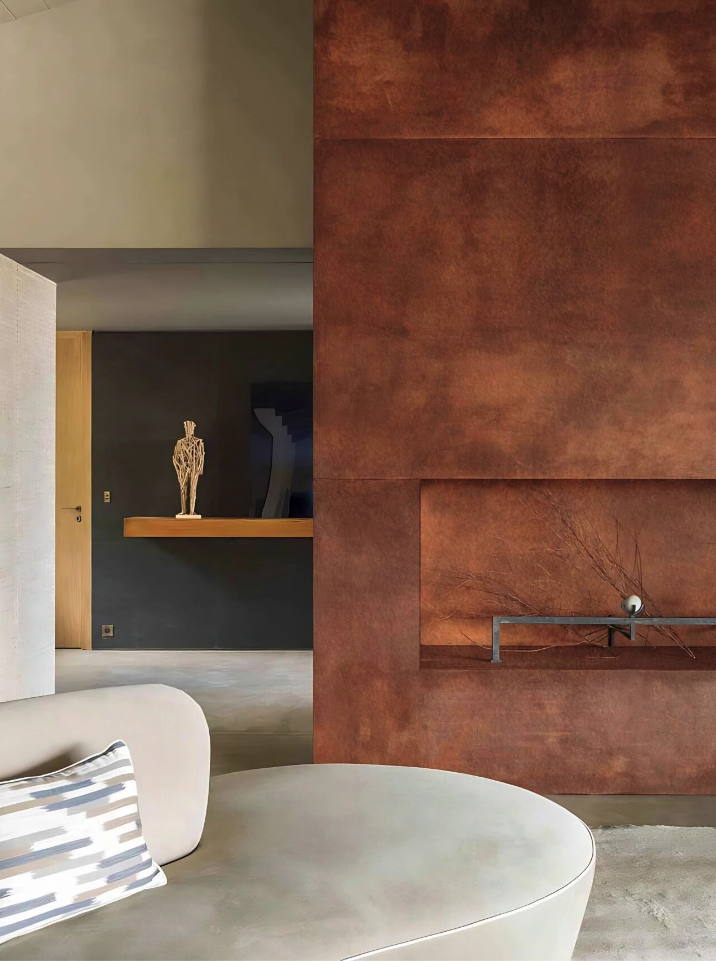
Florence’s taste is defined by the authority of history, the precision of craftsmanship, and the aesthetics of daily life. It extracts standards from the grand narrative of the Renaissance, witnesses precision in the tactile skill of artisans, and defines atmosphere in the afterglow of a glass of red wine—true aesthetics are a set of principles, highly refined and internalized.
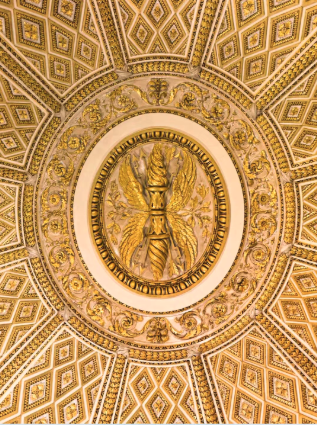
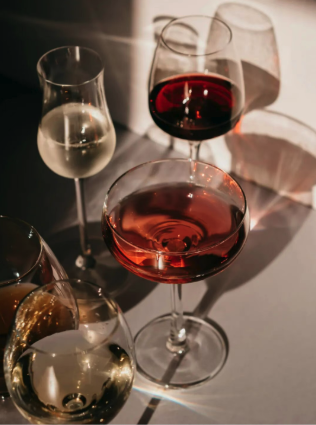
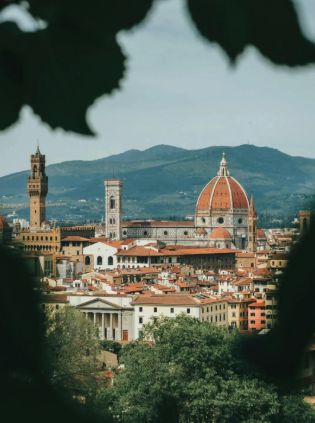
Therefore, an authoritative space must possess a coherent narrative logic. When the textures we see echo the architectural order, when the tactile sensations convey the value of haute craftsmanship, and when the curated colors precisely replicate the light and shadow of Tuscany—then space transcends mere emotional resonance and becomes a tangible declaration of design philosophy.
Ultimately, all of this serves to create an enduring space that transcends trends and defines the present moment.
Design Takeaways
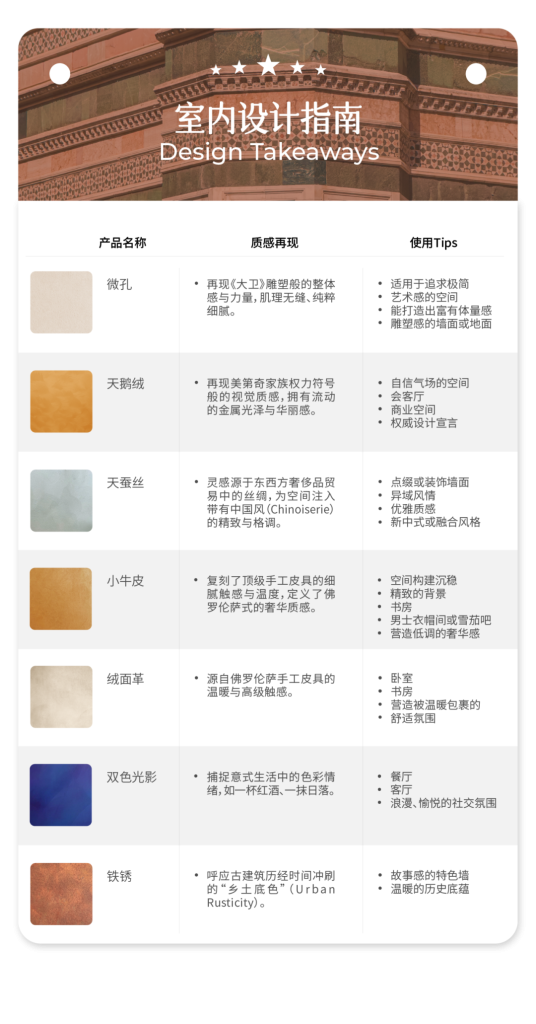
好的,这是根据我们之前对话中确定的专属名词翻译,为您整理的质感名称、再现效果与使用建议表格。
| Texture Name | Sensory Reproduction | Application Tips |
|---|---|---|
| Micro Cement | Reproduces the monolithic feel and power of David‘s sculpture, with a seamless, purely delicate texture. | Suitable for spaces pursuing minimalism and artistry; can create walls or floors with a sense of volume and sculptural quality. |
| Gilded Eider | Reproduces the visual texture of Medici power symbols, possessing a flowing metallic luster and opulence. | Ideal for spaces that need to project an aura of confidence, such as reception rooms or commercial areas, serving as an authoritative design statement. |
| Sky Silk | Inspired by the silk from East-West luxury trade, it infuses space with Chinoiserie-inspired refinement and style. | Can be used to accent or decorate walls, bringing a touch of exotic elegance; particularly suited for new Chinese or fusion styles. |
| Calf Leather | Replicates the delicate touch and warmth of top-tier leather goods, defining Florentine luxury. | Creates a composed, refined backdrop; suitable for studies, men’s dressing rooms, or cigar lounges to cultivate understated luxury. |
| Nubuck | Derived from the warmth and premium tactile sensation of Florentine leather craftsmanship. | Use in bedrooms or studies to create a comfortable, enveloping atmosphere. |
| Rouge d’Artisan – Duo-Tone | Captures the chromatic moods of Italian life, like a glass of red wine or a stroke of sunset. | Infuses dining or living areas with a romantic, pleasant social ambiance. |
| Rust Patina | Echoes the “Urban Rusticity” of ancient architecture, weathered by time. | Create a feature wall with a narrative quality, imbuing the space with a warm historical depth. |
Why Choose iLuvVivid Artisan Paint?
We know you’re not just looking for paint—you want a partner to help elevate your space. iLuvVivid’s artistic coatings deliver stunning color with premium performance, making it easy to achieve your vision in one step.
Website: www.iLuvVivid.com
About Us