


The moment I touched “alabaster,” I truly understood what Tuscany means.
Artisan Paint · Imported Artisan Paint Brands · Top 10 Artisan Paint Brands · Luxury Artisan Paint · High Value Artisan Paint
What are the inspiration sources for iLuvVivid?
(Video Content:
Tuscany is not a stylistic package of earthy yellows and wrought iron. True Tuscany is an atmosphere that makes a home feel natural, unique, and effortlessly relaxed.
Its underlying logic stems from Cucina Povera—the simplest ingredients can create the most touching experiences.
If home is a painting, Tuscany teaches us how to compose it. The three layers—background, middle ground, and foreground—determine the soul of a space.
The background is the foundation of home. The undulating softness of rolling hills, like in Earth’s Waves, allows the space to relax naturally. The gentle upward lightness of Treetop Whispers breathes life into every moment.
The middle ground tells the story of home. Traces of Time captures the weathered texture of San Gimignano’s history, while Fortress Stone conveys the stability and security of Montalcino. Sandstone radiates the warmth of Pienza’s sunlight.
The foreground is the finishing touch of atmosphere. The matured texture of Aged Leather offers a gentle matte warmth and the depth of a story. The inner glow of Alabaster softens light itself.
Tuscany lifts a home out of uniformity, allowing every wall to become your signature. And iLuvVivid can be the tool you use to express it.)
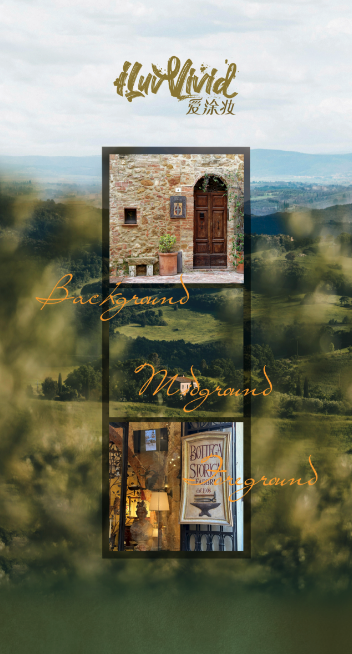
Toscana
Just this term alone is enough to evoke an atmosphere bathed in golden sunlight.
However, this deeply resonant beauty is also the most prone to falling into the trap of “replication.” We have all seen those regrettable attempts: wrought iron misinterpreted as piles of earth-yellow hues, imitation antique tiles devoid of warmth… When an atmosphere is reduced to a few easily replicable symbols, its original spirit and value quietly fade away.
This is perhaps the greatest challenge in creating a soulful space.
The true essence of Tuscany is not a “style” but an “atmosphere.” Its aesthetic core derives from the philosophy of “Cucina Povera” (poor cooking)—using the simplest, most humble, and most authentic local ingredients to create the richest and most profound flavors.
The same applies to space. Just as a great painter uses the most earthy pigments to compose a scene, a sophisticated “Tuscan” atmosphere begins with respect for and the application of its “honest materials.”
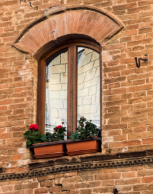
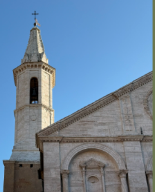
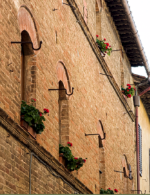
Therefore, we should not start with “style,” but with “composition”—much like a painting, envisioning Tuscany through the concepts of background, middle ground, and foreground.
The Canvas of the Earth
— Unfolding a “Humble” Canvas
Background
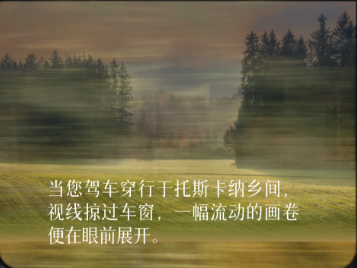
As you drive through the Tuscan countryside, glancing out the car window, a living canvas unfolds before your eyes.
This is the iconic landscape of Val d’Orcia: undulating hills like velvet-covered waves, layered upon each other all the way to the horizon.
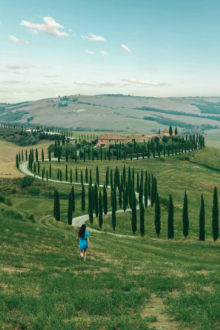
And those “iconic pointed trees”—the cypresses—do not grow randomly. They are part of Tuscany’s architectural language, planted by farmers as windbreaks or standing like loyal sentinels, marking the paths to farmhouses and vineyards.
This is the grand background of the painting, the foundational layer of the Tuscan atmosphere.
Yet this is not purely nature—this “canvas of the earth” is the result of thousands of years of co-creation between humans and the land. These seemingly casual hills are, in reality, carefully cultivated fields of wheat, vineyards, and olive groves.
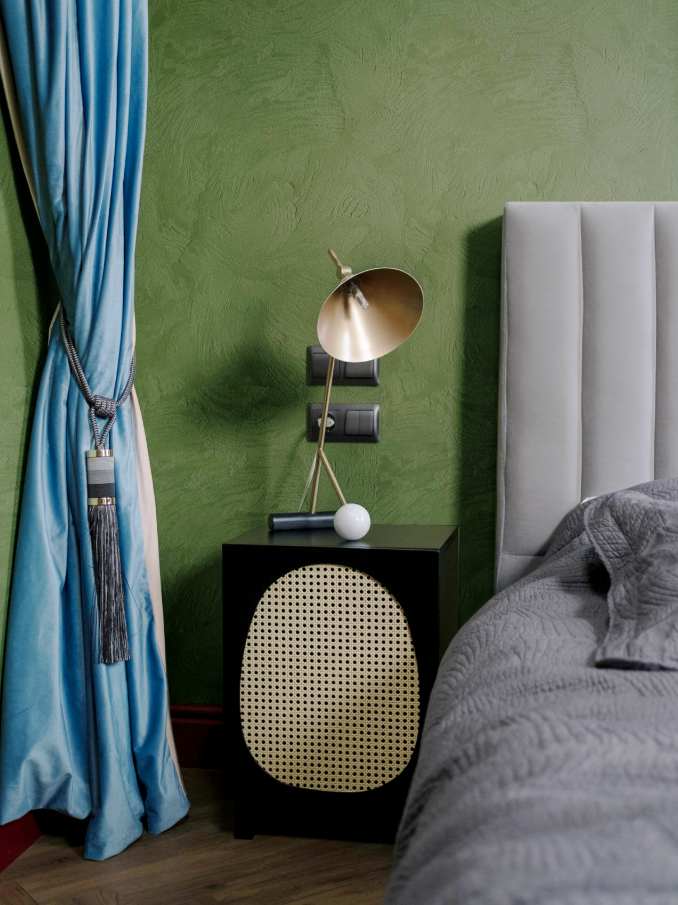
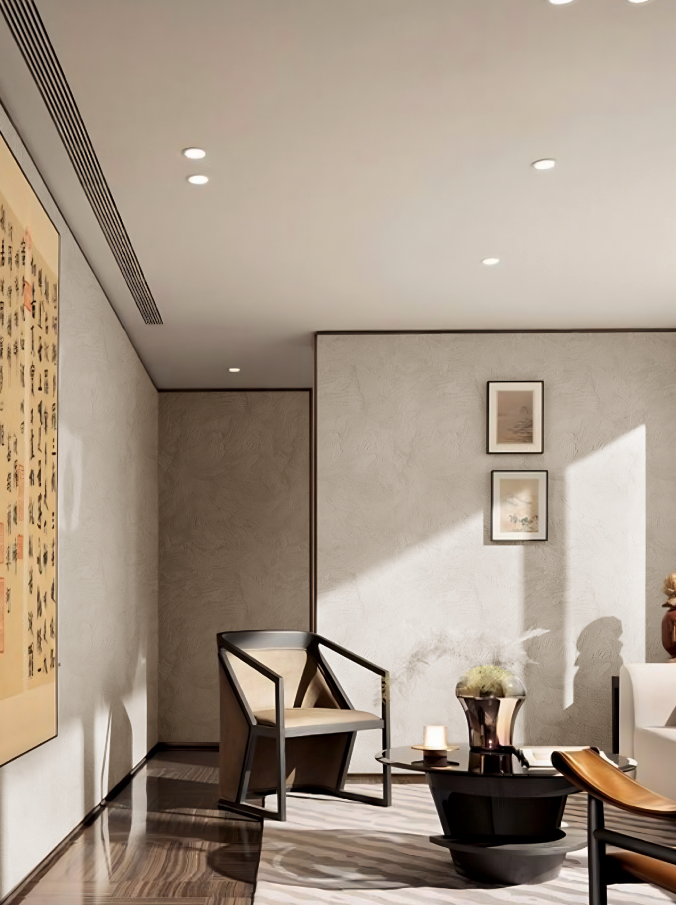
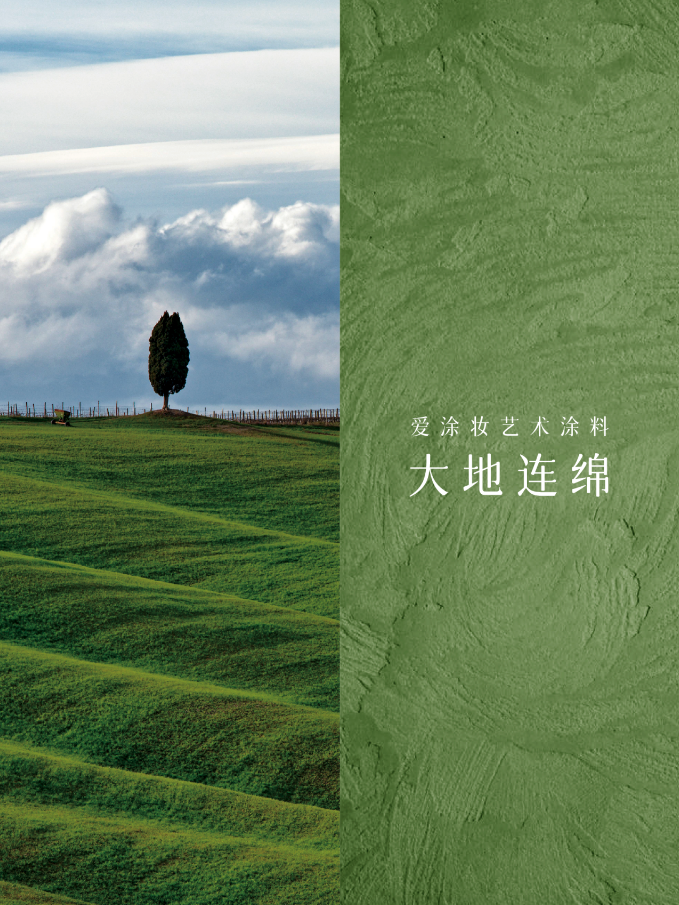
Rolling Hills — The “Horizontal Brushstrokes” of the Canvas
The dynamic texture of this finish perfectly echoes the horizontal brushstrokes of the painting, much like the undulating waves of the hills in Val d’Orcia.
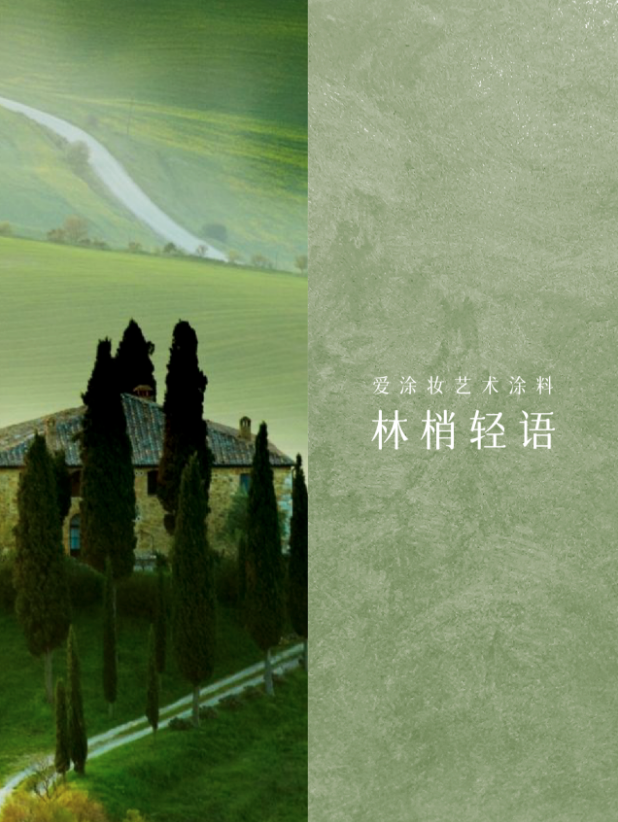
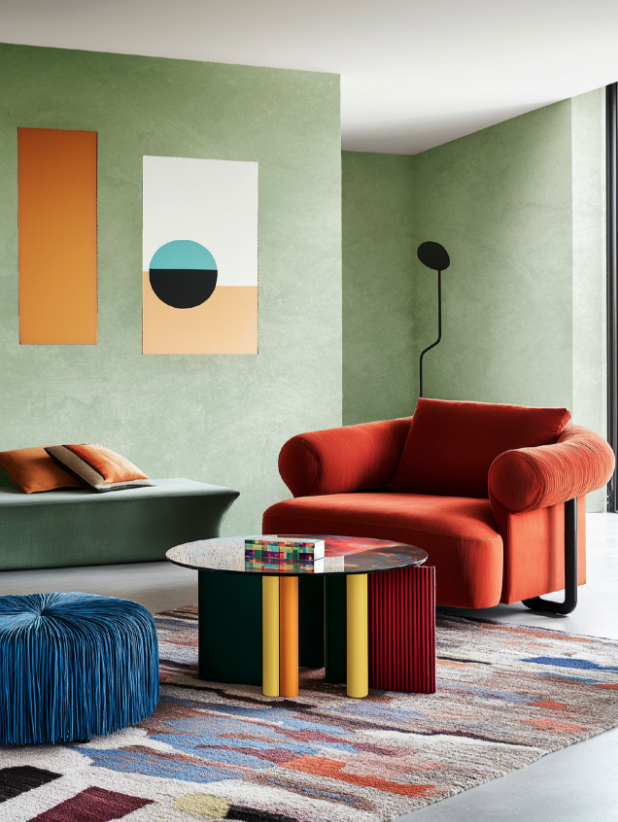
Cypress Trees — The “Vertical Brushstrokes” of the Canvas
The light and fluid texture of this finish perfectly captures the ethereal atmosphere of the vertical brushstrokes in the painting, much like the gentle whisper of cypress and olive tree crowns swaying in the wind.
“The Town” Setting
— Narrating the Passage of Time
Midground
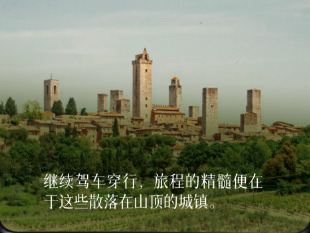
From the wide-angle “background,” we naturally zoom in to the “middle ground”—where the “story” of this painting unfolds. Continuing our drive, the essence of the journey lies in these hilltop towns scattered across the landscape. You’ll find that no two towns are exactly alike; each possesses its own distinctive character (caratteristica).
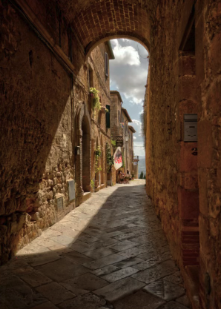
Perhaps one town is famed for its dozens of medieval towers piercing the sky, while another is guarded by a majestic fortress built in the 14th century, with ancient wine cellars (Enoteca) hidden within its towering walls. Or maybe its architecture is almost entirely crafted from golden sandstone, embodying the harmony and ideals of the Renaissance.
This is the “middle ground” of the composition—the very soul that breathes the essence of “time” into this painting.
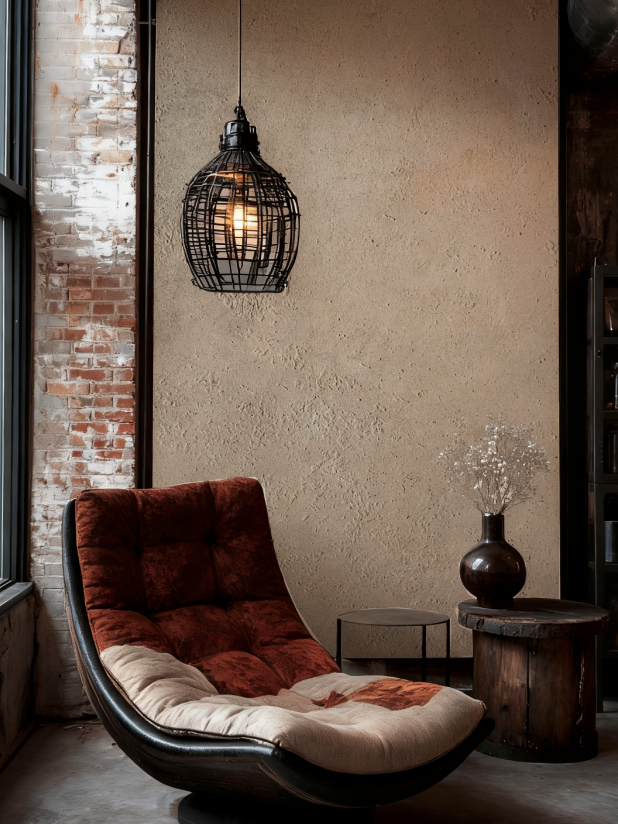
San Gimignano — The City of Towers
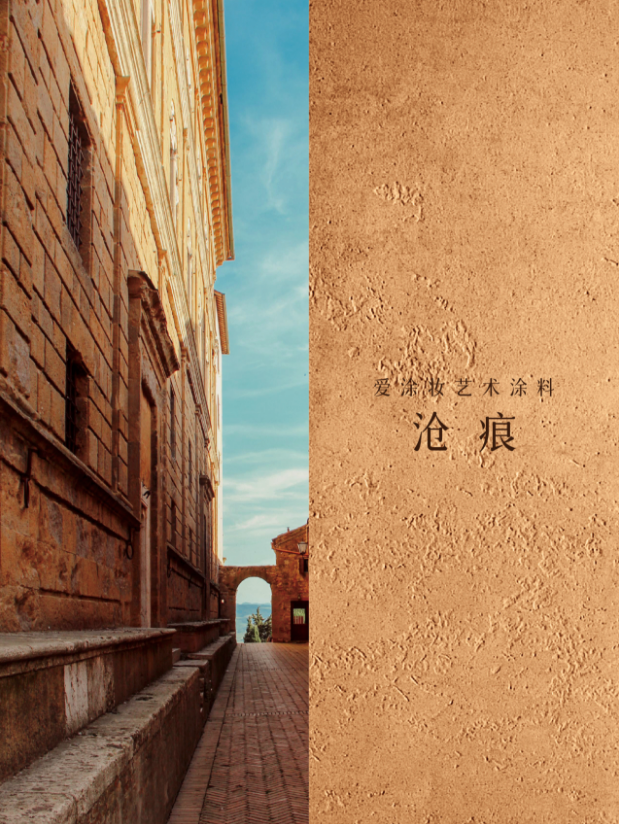
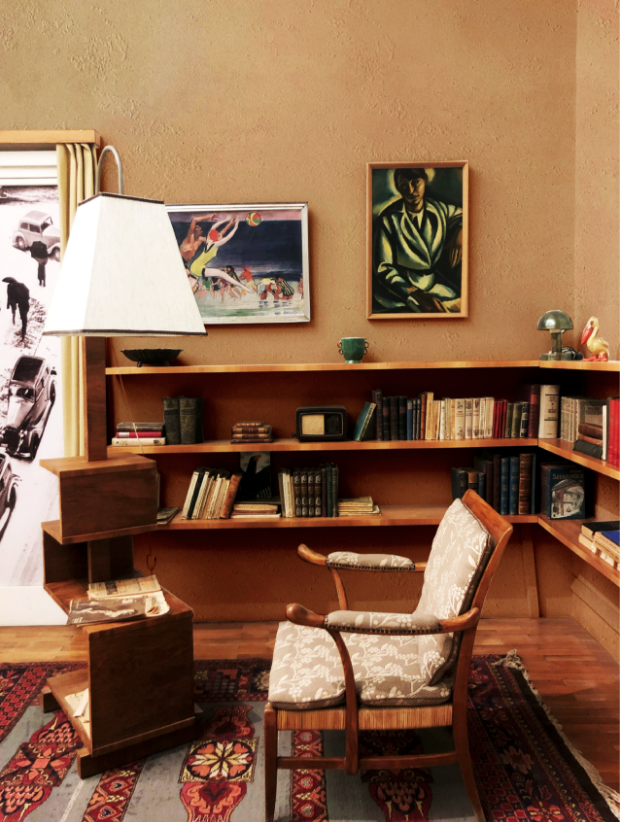
This medieval “City of Towers” narrates a story of history and strength. The texture of Canghen recreates the rough, weathered texture and mottled hues left by centuries of wind and rain on the stones of those ancient towers. This is time made visible.
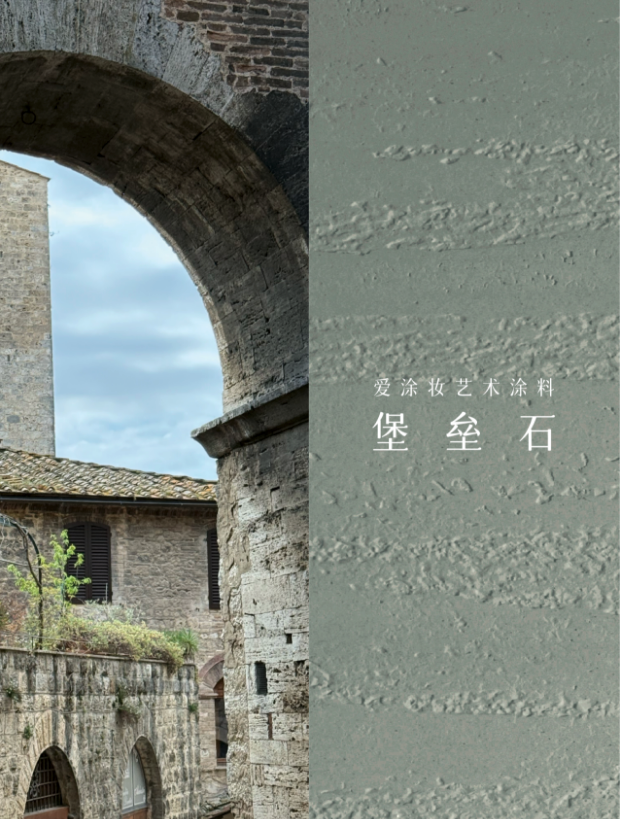
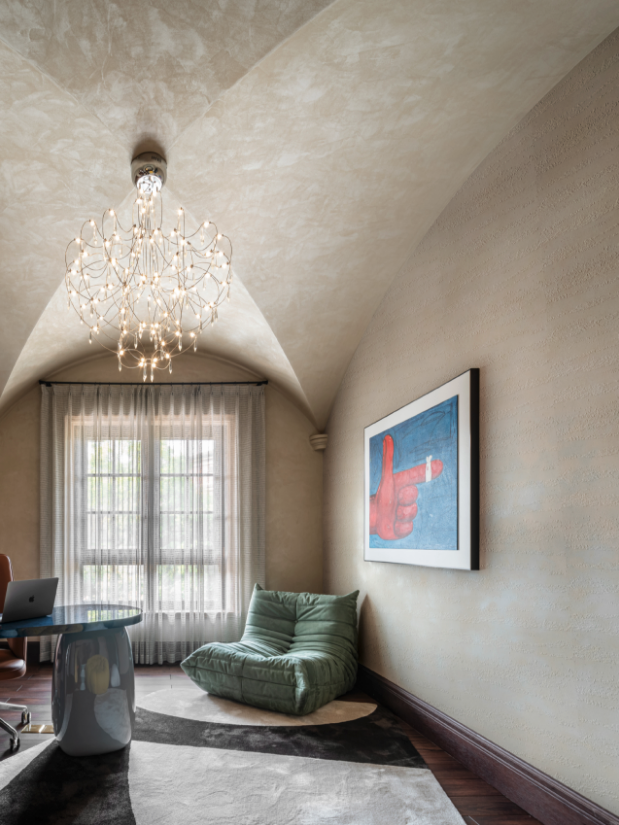
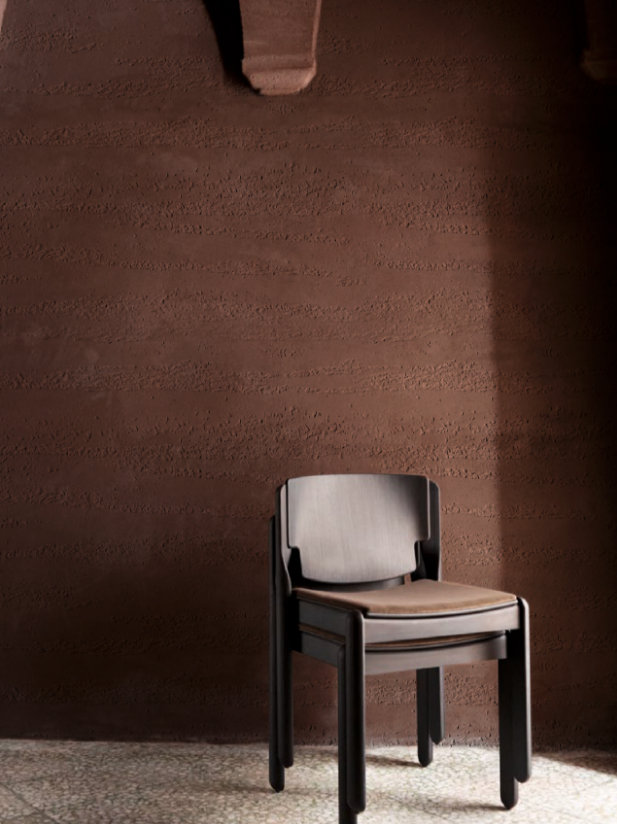
Montalcino — The City of Fortress and Wine
Guarded by a 14th-century fortress, this town exudes a deep and steadfast sense of security. To capture this essence, Fortress Stone focuses on the “eternal stratification” of ancient travertine. Its heavy, foundational texture also creates an atmosphere reminiscent of a wine cellar—a sanctuary for “deep aging.”
Pienza — The Sun-Baked City
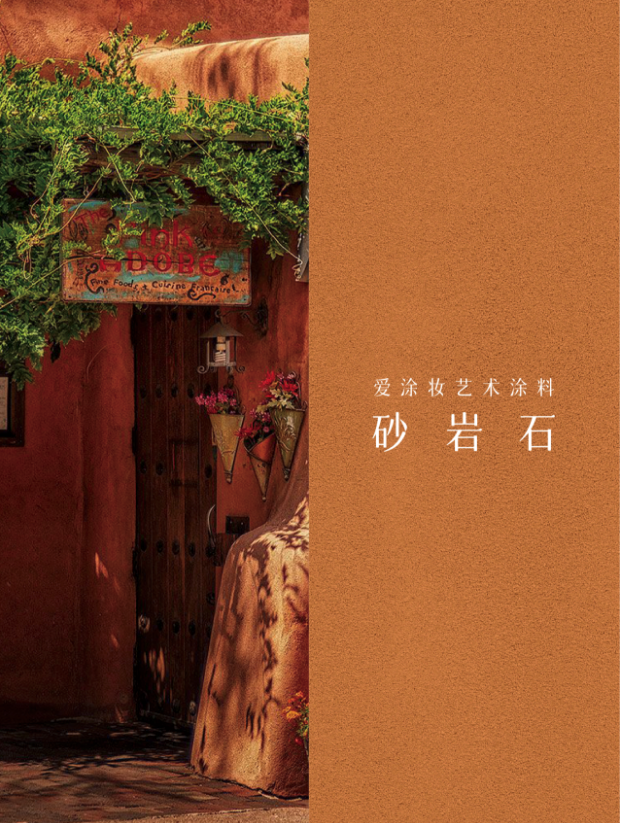
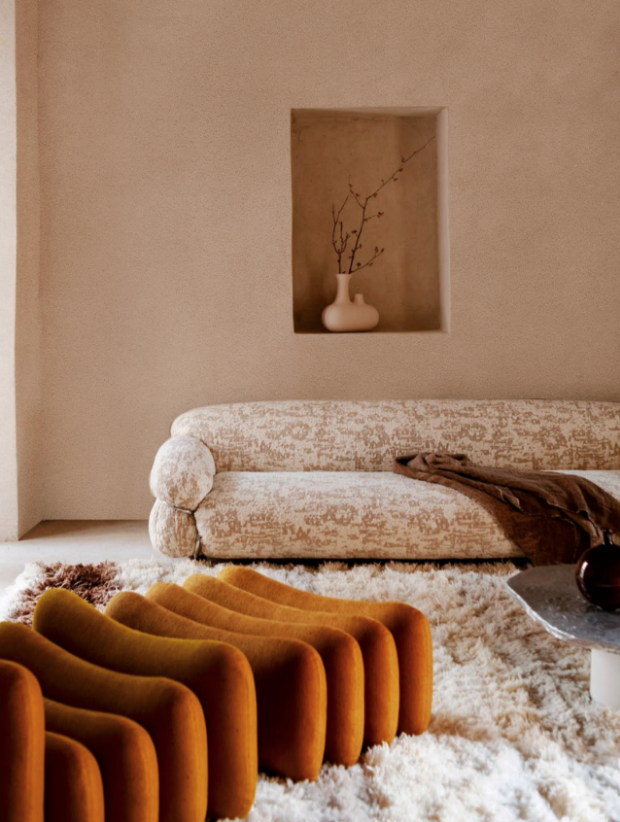
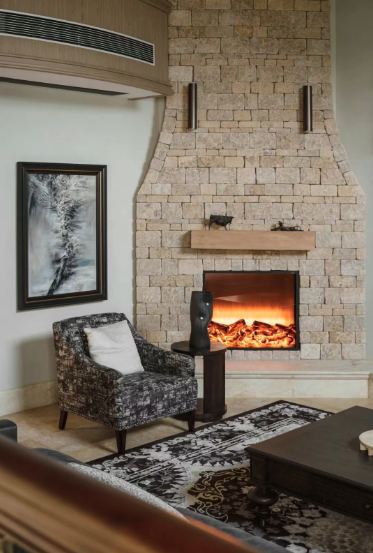
The harmony and brightness of Tuscany are most fully embodied in Pienza. As an “ideal” Renaissance city, its consistent use of warm sandstone gives it a unique yellowed texture, as if “baked” by the sun. The “humble yet warm, solid as stone” quality of Sandstone precisely echoes this “sun-baked” ambiance.
Close-Up of “Artistry”
— The Humanistic Details That Infuse “Atmosphere”
Foreground
Finally, the “foreground” of the painting—the visual focus.
When we zoom in from the “middle ground” of the towns—those materials refined through craftsmanship.
The soul here lies in the workshop (Bottega), where the final creations are imbued with warmth and personality: the subtle glow of plaster, the soft richness of lambskin…
This is the ultimate tactile expression of “craftsmanship”—the very essence that defines the “character” and “mood” of Tuscany.
Alabaster — The “Inner Glow” of Material
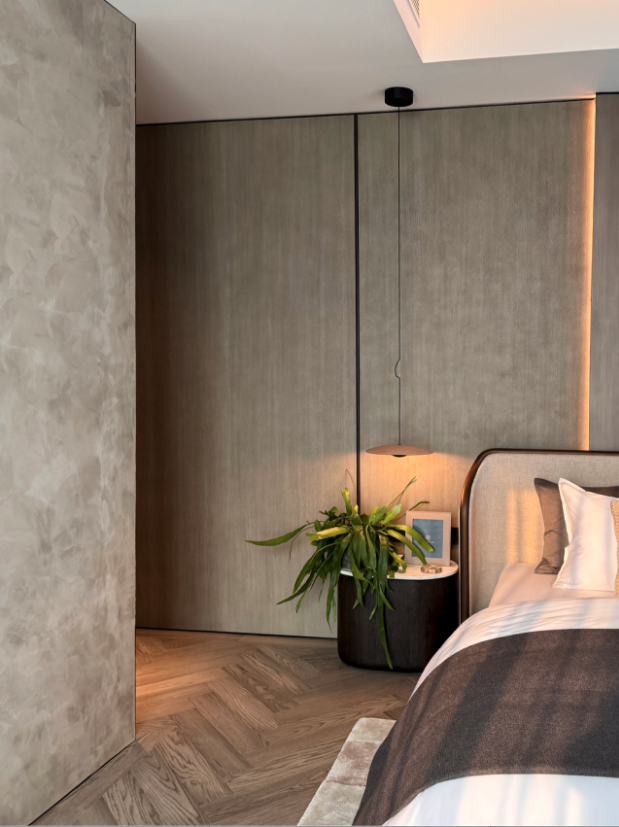
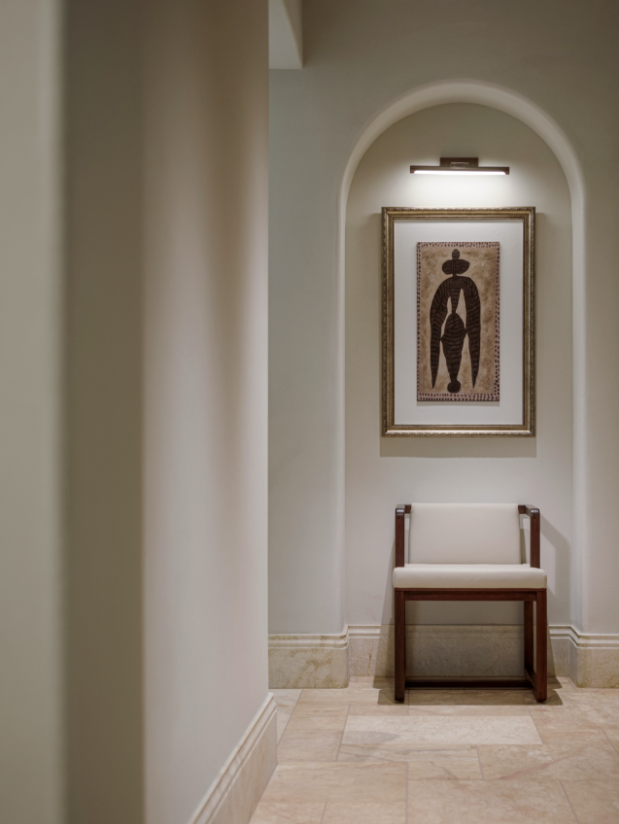
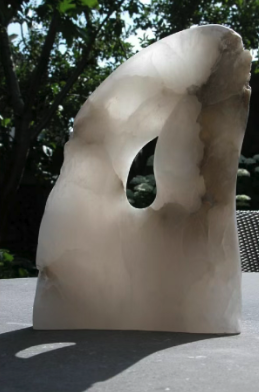
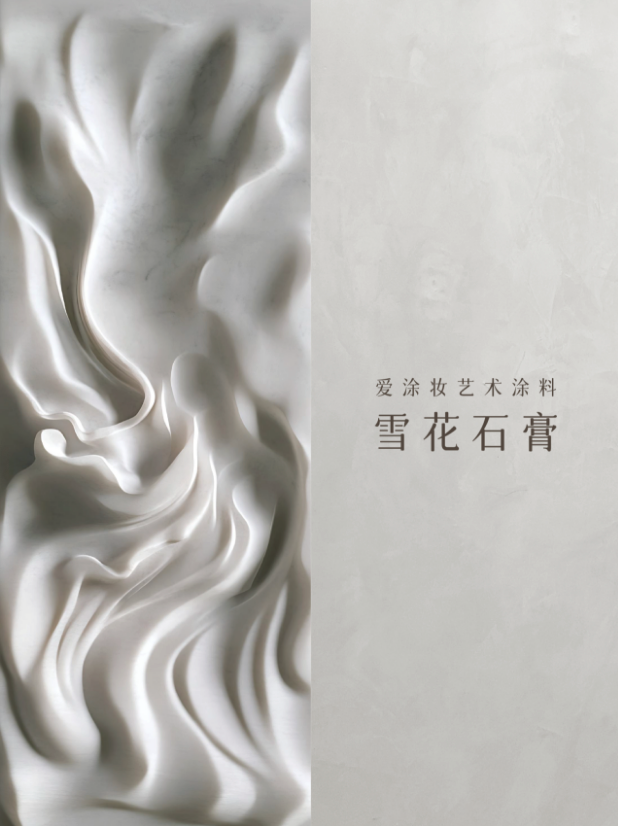
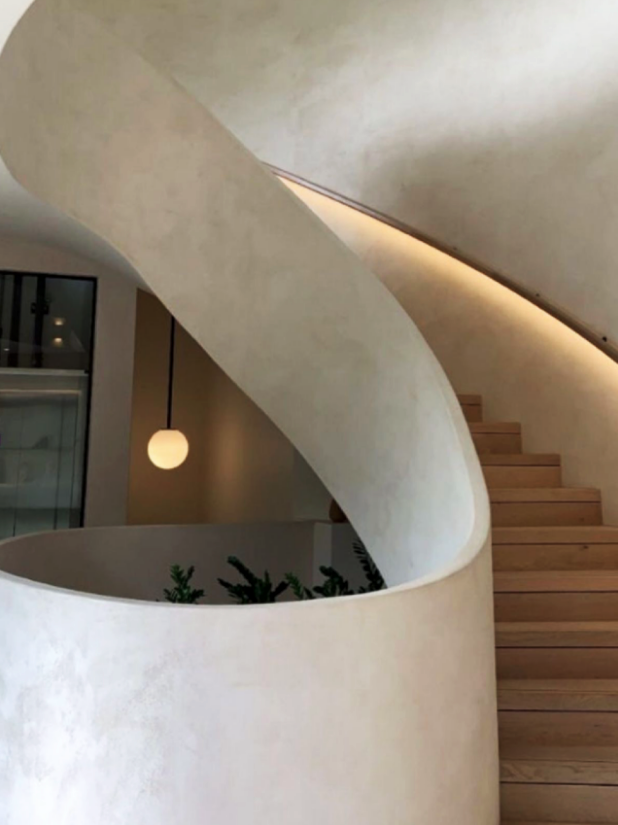
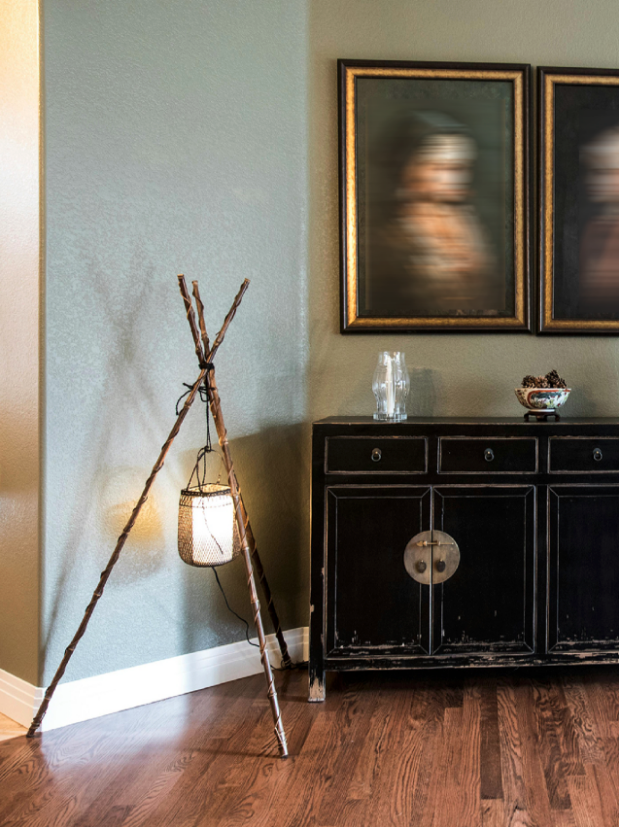
Originating from the namesake craftsmanship of Volterra, the essence of this material lies in its ability to “transform stone into light.” It does not simply reflect light but exhibits a unique semi-translucent texture, as if holding light within itself. This inner radiance ultimately makes the wall surface appear to glow from within, creating a subtle sense of “elegance.”
Aged Leather — The “Aged” Texture
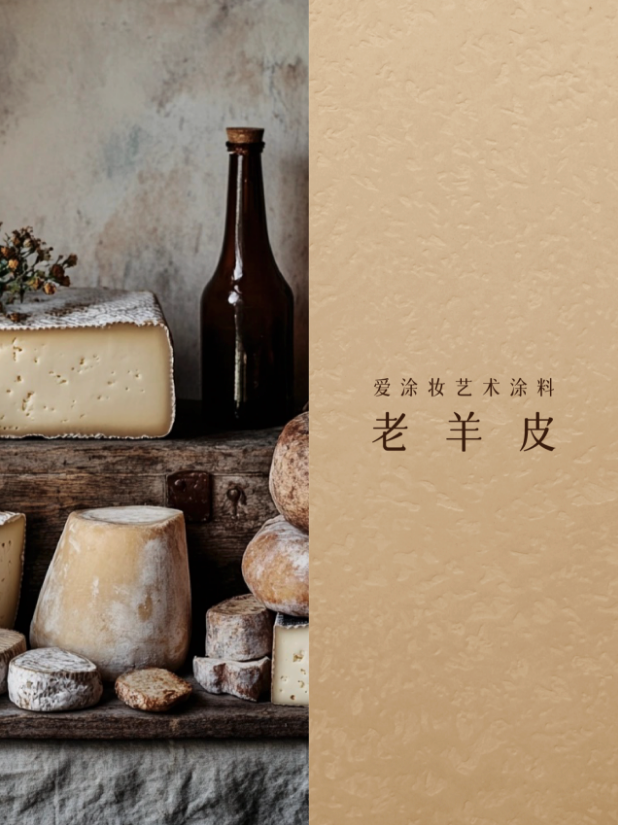
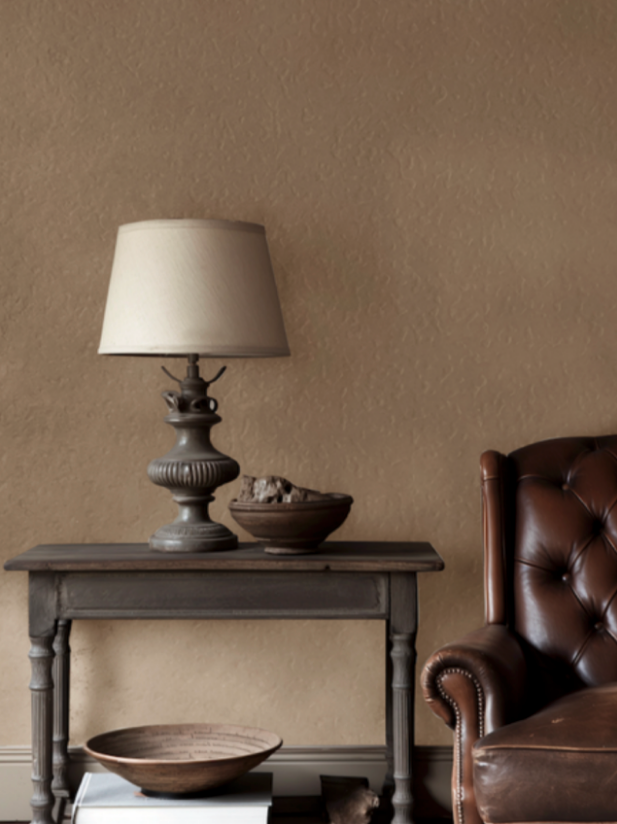
The ultimate tactile expression of this “rustic elegance” draws its inspiration from the test of “maturation.” Much like the rind of Pecorino cheese, its value lies not in instant brilliance but in the “traces” left by patient refinement over time. Aged leather imparts this unique warmth and substantial texture to walls, as if the material itself tells a story of “maturation” and “terroir.”
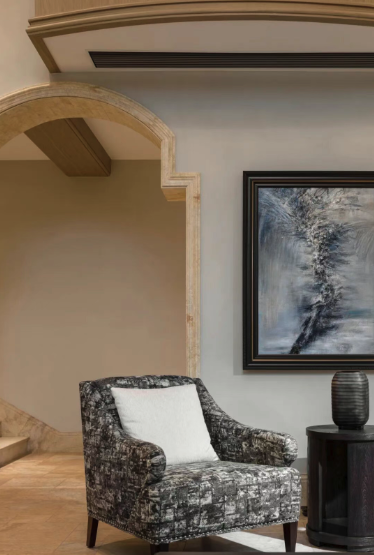
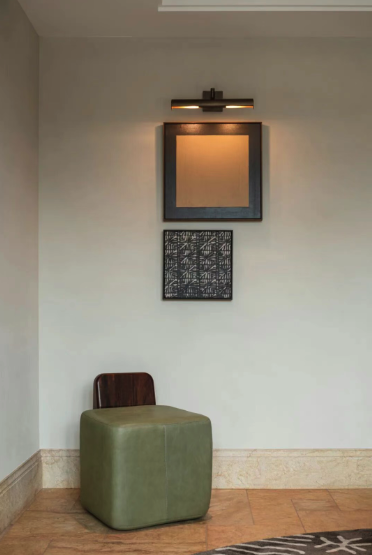
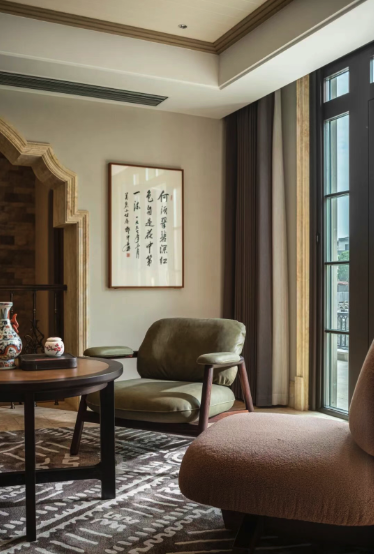
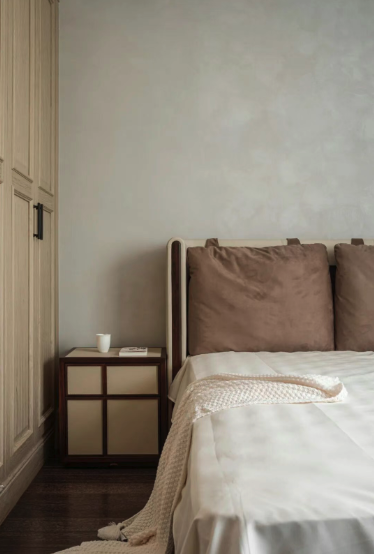
The essence of truly “creating an atmosphere” lies not in the accumulation of “styles.”
It is a philosophy of “composition,” requiring the breadth of “background,” the depth of “middle ground,” and the warmth of “foreground.” Only when these three harmoniously coexist in a space can a “soulful” world be constructed. The artistic coatings of iLuvVivid are born precisely to carry this soul—enabling every space you create to vividly recreate the painting of Tuscany.
Design Takeaways
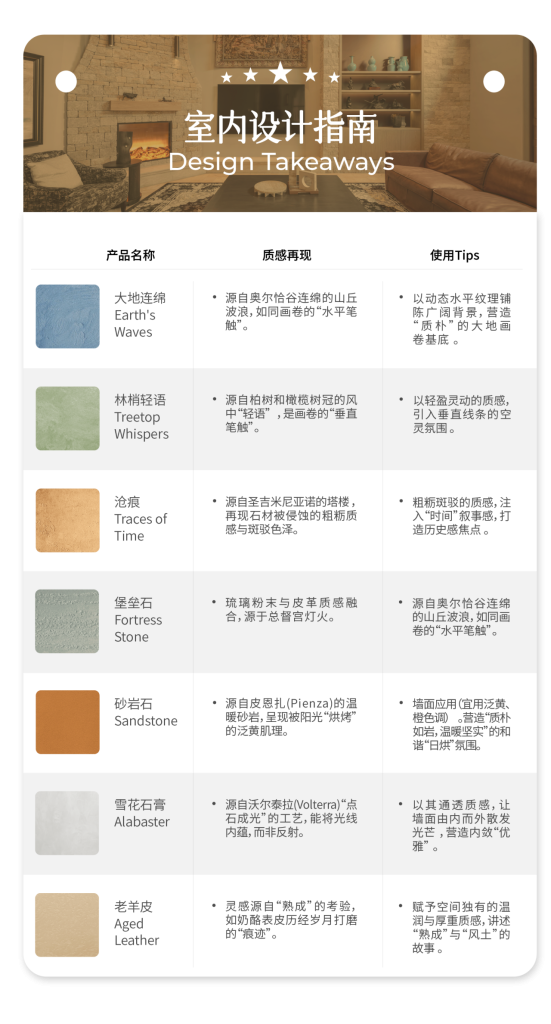
| Texture Name | Texture Rendering (Inspiration Source) | Usage Tips (Spatial Effect) |
|---|---|---|
| Earth’s Waves | Inspired by the rolling hill waves of Val d’Orcia, resembling the “horizontal brushstrokes” of a painting. | Use dynamic horizontal textures to create a broad background, establishing a “rustic” foundation for the earthy canvas. |
| Treetop Whispers | Inspired by the gentle “whispers” of cypress and olive tree crowns swaying in the wind, representing the “vertical brushstrokes” of the painting. | Introduce an ethereal atmosphere with light and fluid textures, adding vertical lines to the space. |
| Traces of Time | Inspired by the towers of San Gimignano, recreating the rough texture and mottled hues of stone eroded over time. | Use coarse and mottled textures to infuse a sense of “time” and narrative, creating a focal point with historical depth. |
| Fortress Stone | Inspired by the 14th-century fortress of Montalcino, focusing on the “eternal stratification” of ancient travertine. | Employs a heavy, foundational texture to evoke a deep, solid sense of security and a sheltering atmosphere for “deep aging.” |
| Sandstone | Inspired by the warm sandstone of Pienza, showcasing a sun-“baked” yellowed texture. | Ideal for wall applications (preferably in yellow or orange tones). Creates a “humble as stone, warm and solid” harmonious “sun-baked” ambiance. |
| Alabaster | Inspired by the craftsmanship of Volterra, which “transforms stone into light,” capturing and internalizing light rather than reflecting it. | With its translucent quality, it allows walls to glow from within, creating a subtle sense of “elegance.” |
| Aged Leather | Inspired by the test of “maturation,” such as the weathered “traces” on the rind of aged cheese. | Imparts a unique warmth and substantial texture to the space, telling a story of “maturation” and “terroir.” |
Why Choose iLuvVivid Artisan Paint?
We know you’re not just looking for paint—you want a partner to help elevate your space. iLuvVivid’s artistic coatings deliver stunning color with premium performance, making it easy to achieve your vision in one step.
Website: www.iLuvVivid.com
About Us